
France relies on a highly nuclear-dependent grid because it provides the nation with predictability. Most of the country’s electricity comes from its reactor fleet, which represents a bet on carbon-free baseload power that’s paid off for decades. But that same fleet has a weak spot that heat waves keep exposing. Most reactors depend on river water for cooling, and when the rivers get too warm, the plants have to throttle back or shut down.
A Reactor Goes Dark on the Garonne
In July 2026, a reactor at the Golfech nuclear plant in southern France was temporarily shut down as the Garonne approached its environmental discharge threshold.
Regulations limit how much nuclear plants can warm river water before returning it downstream, protecting aquatic ecosystems from additional thermal stress. When the river itself is already too warm, the plant has less room to operate within those limits, forcing EDF to reduce output or take the reactor offline.
Along the Seine, EDF also expected production restrictions at the Nogent nuclear power station from July 14 if river temperatures reached forecast levels. A similar heat wave in 2025 forced several gigawatts of French nuclear capacity offline during peak demand.
In general, Europe has been consistently hitting record-breaking heat wave temperatures in recent years, underscoring the devastating impact that global warming has had on people around the world.
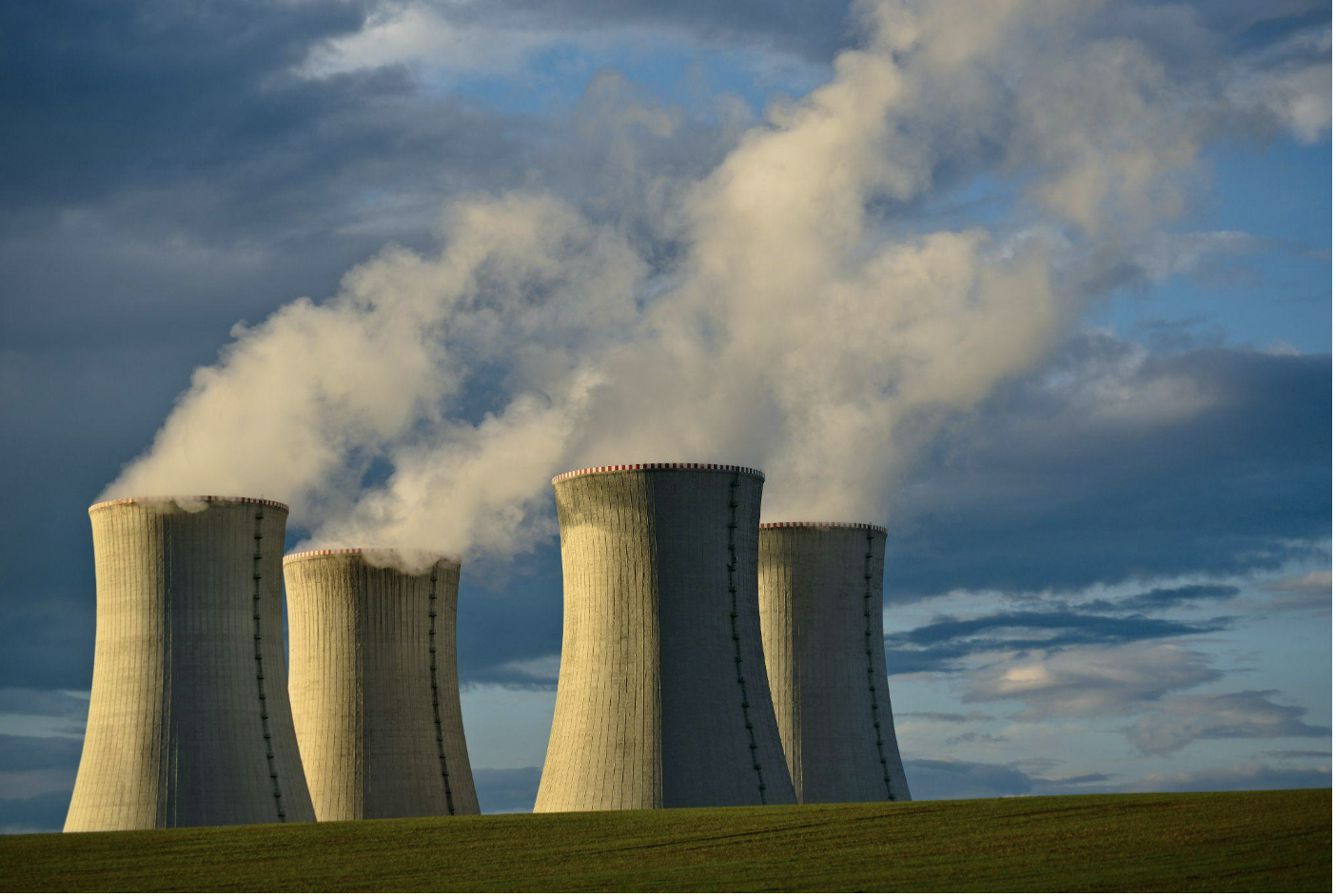
Unsplash link: https://unsplash.com/photos/gray-concrete-towers-under-white-clouds-and-blue-sky-during-daytime-vMQFh9rAkeU
The Export Cushion Disappears Right When It’s Needed
Much of France’s inland fleet was built decades ago along major rivers for easy access to water. The cooling systems were engineered around temperature assumptions that a warmer climate has since made outdated as the river water heats up beyond capacity. The thermal limits that trigger these shutdowns exist for good reason, but they weren’t written with today’s extended, high-intensity heat events in mind.
This goes beyond the domestic grid. France has long exported its afternoon surplus to Germany, Italy and the UK, and that surplus is exactly what shrinks when the heat hits hardest. Reporting on how the same heat wave squeezed France’s export capacity found that the market dropped sharply within days. Domestic supply held up well, but the cushion that normally keeps regional prices in check disappeared just as air-conditioning demand across the rest of Western Europe was climbing, too.

Unsplash link: https://unsplash.com/photos/yugoslavia-flag-under-blue-sky-lYzap0eubDY
Patching Old Reactors Versus Building Around the Problem
EDF is already treating the issue as a long-term adaptation challenge. The utility has outlined an estimated €8.7 billion climate adaptation plan over the next 15 years, covering its nuclear, hydropower and island energy operations in France. This retrofit approach keeps the fleet where it is, but focuses on making existing assets more resilient to warmer rivers, lower flows and longer periods of climate-driven operating stress.Yet, retrofit work on a live reactor isn’t a low-stakes maintenance job. Touching the cooling infrastructure at an operating site calls for the same discipline plants lean on at the other end of their life cycle, where near-miss identification is treated as a core part of a strong safety culture.
The other option is to build around the problem by adopting structures such as hybrid dry-cooling towers, larger reservoirs or smaller reactors sited away from rivers already under thermal stress. It’s a reasonable idea on paper, but it’s slower and more expensive to build out. France is also trying to add new reactors under its long-term energy plan on top of everything else, a balancing act laid out in broader reporting on France’s energy strategy.
At the European level, distributed cooling means reducing peak demand through district cooling networks, thermal storage, heat pumps and demand-response systems. These tools will not fix river-temperature limits at nuclear plants, but they can make the grid less dependent on every reactor running at full output during heat waves.
The trade-off is timeline and cost. Nuclear retrofits can fit into existing outage schedules, while distributed cooling requires new building systems, thermal networks and grid programs.
Where This Leaves European Energy Security
Ultimately, France’s nuclear fleet is aging into a climate it wasn’t built for. Retrofitting the cooling systems is the realistic short-term move, and distributed cooling or newer reactor designs are the longer-term bet.
About the author: Grace works as an environmental and green technology writer. She is also the senior editor of Environment.co.

