
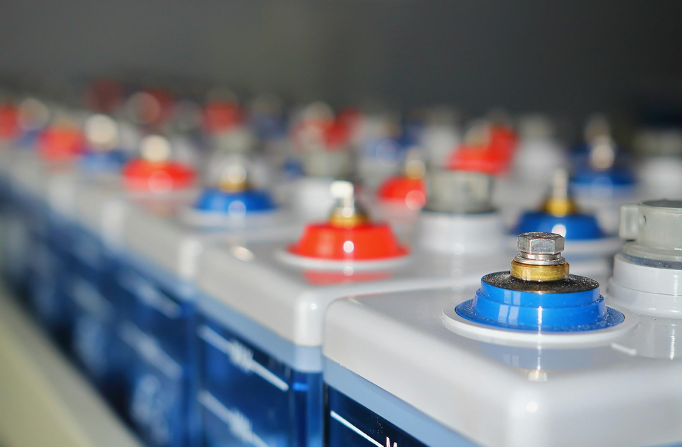
Image: Unsplash
Forklift fleets have helped contribute to the sustainability of building operations ever since battery-powered units became widely adopted. However, incoming updates to Europe’s battery compliance programmes will require a new set of factors to consider.
Understanding the EU Battery Regulation 2023/1542
Industrial batteries are regulated under the EU Regulation 2023/1542 to ensure producer responsibility and minimise the use of hazardous materials. There are a variety of requirements included, depending on the nature of the battery.
For example, rechargeable industrial batteries need to include a carbon footprint declaration, while portable batteries should be removed by the end user without requiring any specialised tools.
Traction batteries for forklift fleets are covered under industrial batteries, which exclude other categories, such as batteries for electric vehicles (EVs) and light means of transport (LMT). However, all these should be primarily designed and manufactured for optimal performance and a minimal environmental footprint. If rechargeable, they also require a carbon footprint declaration.
There were several guidelines for how LMT batteries should be collected and distributed throughout the EU. However, given that these batteries were experiencing increasing sales and evolving developments, these regulations were due for reevaluation. Lithium-based batteries currently hold 38% of the forklift battery market.
New Battery Passport Regulation in 2027
Clearer regulations have emerged four years after the EU Battery Regulation 2023/1542 was launched. On February 18, 2027, every industrial battery over 2 kWh placed on the EU market — including lithium-ion forklift batteries — must carry a digital battery passport.
In the guidance document, there are 71 verified data points surrounding sustainability. There’s also an explanation of whether each is optional or mandatory for EVs, LMT or regular industrial batteries.
For warehouse operators still running gas or diesel forklifts, or those with ageing lead-acid fleets, September 2026 marks the last realistic window to procure electric forklifts before the compliance deadline hits.
Switching from electric forklifts can be beneficial since they are more environmentally-friendly than gas-powered models, as they run on batteries instead of engines. This swap can lead to fewer parts replacements and simpler preventive maintenance. Electric forklifts also have smaller frames and have fewer moving parts, making them easier to manoeuvre.
Main EU Battery Passport Requirements
Transparency and clarity are vital. Here are the key data points manufacturers and suppliers should prepare for in light of EU battery passports in the coming year.
Manufacturing Details
Several data points require basic information about the manufacturer, including their registered trade name, trademarks and postal address. Web and email addresses are optional.
Manufacturers must disclose the geographic location of the battery manufacturing plant. The exact month and year of manufacture are also mandatory. These variables can be critical for understanding the battery’s age and installation.
Product Information
Product information is also critical for attaining the battery passport. There are numerous data points, such as the weight, capacity and chemistry of the battery. It’s also vital to disclose if any hazardous substances other than mercury, cadmium or lead are present.
Certain specifics don’t necessarily have to be provided or displayed, such as the battery’s material composition. Previous data points already reveal these, which helps avoid repetition.
Some things are only applicable to certain categories. For instance, expected battery lifetime, expressed in cycles, is mainly relevant to EVs and LMTs, as some industrial batteries don’t report their lifetime in cycles.
Sustainability Information
Carbon footprint declaration and label are still part of EU battery regulations. However, the exact format remains unspecified, with further details to be set out in the implementing act.
Some data points are required only in later months or are applied in line with other relevant delegated acts. One of these is the information on responsible sourcing in accordance with battery due diligence policies.
Ensuring Industrial Battery Compliance in Europe
Understanding the main requirements for industrial batteries can help with compliance efforts. Here are several key highlights necessary for adherence.
Life Cycle Carbon Footprint
Lithium is experiencing shortages as demand continues to rise, but it has an undeniable reputation for a longer useful life. However, declarations should be made regarding the total energy available over the battery’s expected service life. Associated emissions should also be disclosed.
Ideally, a longer life cycle and a lower carbon footprint would ensure compliance with industrial battery standards. It would also benefit forklift fleets that face more demanding schedules, as they’d be able to carry out those tasks with minimal environmental impact.
Dismantlability
Dismantlability has become a key design element for manufacturers. In a world where replacements have been the answer, making components easier to separate and change can help improve repair and maintenance.
Easier disassembly can also facilitate recycling battery components in the long run. Under the new regulations, certain inaccessible battery compartments will generally have to be redesigned or withdrawn from the market. However, for the LMT, there are different replaceability standards to adhere to.
Recycled Content
While dismantlability is step one of recycling battery components, identifying which materials are recyclable is another important factor. Manufacturers should share documentation on which contents can be taken apart and reused.
Lithium-ion batteries are recyclable, but the industrial processing required to do so has not yet caught up. In the U.S., only around 50% of lithium-ion batteries are successfully recycled. However, given that 99% of lead-acid batteries have been recycled for decades, the opportunity is present.
Attaining a Digital Battery Passport in the EU
Every EV, LMT and industrial battery with a capacity greater than 2 kWh placed on the EU market will need its own digital battery passport from 18 February 2027. While early battery passport pilots and proof-of-concept projects began in 2023, the broader system is still being tested ahead of the 2027 rollout. There are ongoing trials to understand the best ways to work with suppliers, map supply chains and collect the necessary information. Findings will hopefully lead to more robust battery benchmarks and help with compliance.
The digital passport is separate from the physical one, as well as labels and components. It has to be embedded with all the manufacturing, product, performance and sustainability data.
Manufacturers can begin preparing and analysing the data requirements to ensure supplier readiness ahead of the 2027 rollout. Look out for gaps, quality issues or even just areas for improvement that can help meet the mandatory data points.
Attain Compliance for Battery-Powered Items
A battery passport will be vital to ensure continuous use and minimal disruption to operations, but it will require clarification about the battery information. Manufacturers and suppliers alike must be transparent about this data to ensure their stakeholders are compliant.
About the author: Rose Morrison is the managing editor of Renovated Magazine and an experienced writer specializing in energy demand and sustainability. With eight years of experience in the field, she provides EnergyInDemand readers with expert analysis and practical strategies for achieving energy efficiency and reducing carbon emissions. Connect with Rose on LinkedIn.

