
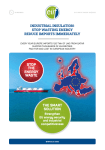
 The European Industrial Insulation Foundation (EiiF) has published a white paper this week that gives us some encouragement that we can achieve energy savings almost immediately and thus help reduce the pain we are suffering from the blockade of the Strait of Hormuz.
Europe is currently importing around 120 TWh of liquefied natural gas (LNG) each year from Qatar—energy that travels vast distances only to be partially wasted within European industry due to poorly insulated or uninsulated equipment. Addressing this inefficiency presents a major opportunity to strengthen energy security while reducing costs and emissions.
The key issue is not a lack of technology, but a gap in implementation. Proven insulation solutions already exist and can be deployed quickly. With targeted action—such as incentivising insulation assessments (e.g. TIPCHECK) and upgrading high-loss equipment—Europe could achieve energy savings of up to 5 TWh within months, even before the next winter.
Looking further ahead, a structured rollout of insulation improvements could save up to 120 TWh annually by 2040. This would effectively eliminate the need for LNG imports from Qatar, while boosting competitiveness and supporting decarbonisation goals.
To make this happen, policymakers are encouraged to set minimum performance standards, such as adopting EN 17956 Class C insulation requirements for all new installations by 2030.
Industrial insulation stands out as a low-cost, ready-to-deploy solution that can deliver immediate and long-term benefits. By acting now, Europe can reduce energy waste, cut imports, and build a more resilient energy system.
You can download the white paper here.

