
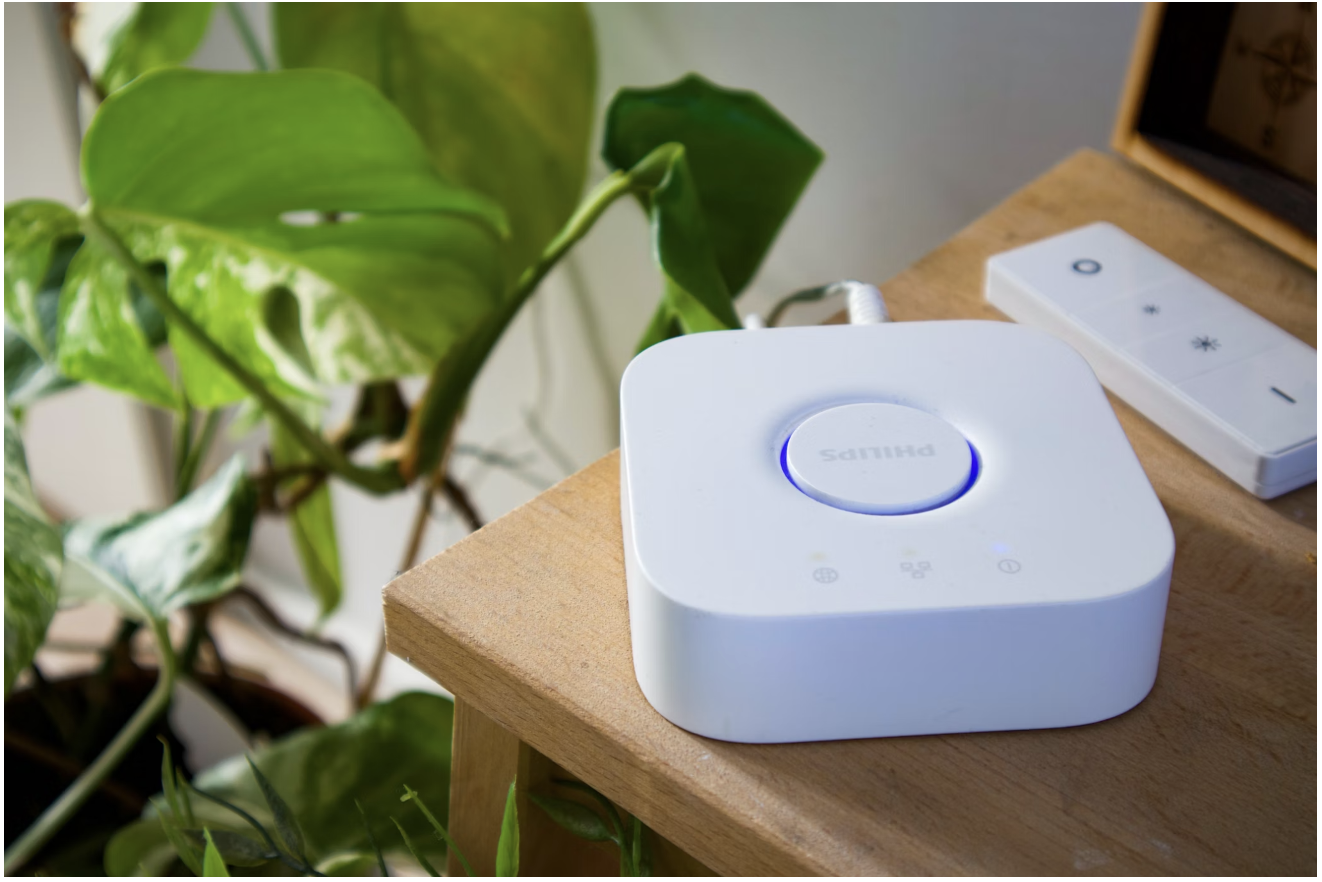
Image by User_Pascal via Unsplash
Smart home technology is transforming the way Europeans use energy at home. Devices like smart thermostats and lighting systems allow residents to see and control their energy use in real time. These tools help make homes more comfortable, reduce energy waste and work well with renewable energy sources.
Smart homes are essential in achieving smart home energy efficiency targets and promoting sustainable living. As governments push for lower emissions, these technologies offer practical solutions that can benefit both households and entire cities.
Understanding Smart Home Technology and Market Trends
The smart home market offers devices and services that automate and improve daily living. These devices connect to the Internet or a central hub and let people control and monitor their homes remotely. Unlike conventional electronics — such as phones or TVs — manufacturers build smart home devices for home automation and communication within the Internet of Things (IoT).
The market has six main segments. Control and connectivity include smart speakers, hubs and plugs. Security covers cameras, sensors and locks. Home entertainment features networked audio and streaming devices. Energy management focuses on smart thermostats and sensors that reduce energy consumption.
Smart appliances include connected washers, fridges and vacuums. Comfort and lighting enhance the home’s ambience with smart bulbs, shades and switches. Technologies such as voice assistants, app-controlled lighting, AI-enhanced thermostats and integrated sound systems are becoming increasingly the new normal in households.
Another example is a smart garage door opener that lets you control your door remotely through a smartphone app. It offers convenience, security alerts and remote access. Most models are compatible with home automation systems and can easily connect with other smart devices. The smart home sector is expanding rapidly. Experts expect global revenue to reach US$174 billion this year and rise to US$250.6 billion by 2029.
They also project household adoption rising from 77.6% to 92.5% during the same period. In Europe, smart homes focus on sustainability and energy efficiency. They also support independent living for older people. Together, these trends are driving a global shift toward smarter, more efficient homes that meet long-term energy and sustainability goals.
Driving Energy Efficiency with Smart Home Technology
Smart home technology is transforming the way households utilise energy. Traditional systems are less responsive to daily routines. Yet, smart systems adapt to changing needs — they monitor, learn and adjust energy use in real time. This innovation supports a sustainable future, helping households reduce emissions whilst promoting mindful and responsible energy use.
At the centre of this progress is the Smart Home Energy Management System (SHEMS). It combines the IoT with machine learning (ML) to manage energy. IoT sensors collect data on temperature, lighting and appliances. The system then analyses this data using ML algorithms like Gradient Boosting, which achieves a predictive accuracy of 0.95. It spots inefficiencies, predicts energy demand and recommends smart adjustments.
These methods are more effective than older approaches, such as Decision Tree or Random Forest regression. SHEMS turns data into action. Homeowners can track energy use, cut waste and control devices through easy-to-use dashboards. Smart thermostats, adaptive lighting and connected appliances adjust automatically, demonstrating home automation energy savings in everyday use. Homes equipped with intelligent systems consume from 10 to 30% less energy than conventional ones.
By merging IoT and ML, SHEMS creates an evolving, self-learning framework that saves money and supports global sustainability goals. As more people adopt smart homes, they will become essential in the energy transition — creating a future where technology and responsibility work hand in hand.
European Policy Drivers and Incentives for Smart Homes
The Energy Efficiency Directive (EED) guides Europe’s move toward a low-carbon future. It prioritises efficient energy use to reduce consumption, enhance energy security and maintain affordable energy, showing how smart home tech helps meet EU energy goals. The 2023 update (EU/2023/1791) made energy efficiency a legal requirement. Now, all major EU policies and investments must consider efficiency. This supports the EU’s goal to cut greenhouse gas emissions by at least 55% by 2030.
Smart home technology aligns with the European Green Deal and REPowerEU, which aim to reduce fossil fuel imports. EU countries must lower energy use by 11.7% by 2030. This mandate caps primary energy use at 992.5 million tonnes of oil equivalent (Mtoe) and final energy consumption at 763 Mtoe. A country’s GDP, energy intensity, and past progress determine its target. If a country misses its target, a gap-filling mechanism ensures that action is taken.
Annual savings obligations have also increased — 1.3% between 2024 and 2025, 1.5% between 2026 and 2027 and 1.9% between 2028 and 2030. These measures improve efficiency in transport, industry and buildings. Whilst helping the EU stay on track for its 2030 targets, the directive also addresses the issue of energy poverty. Countries must protect vulnerable households and offer one-stop support for technical and financial assistance.
Revenue from the expanded Emissions Trading System will fund the Social Climate Fund, helping those most affected by rising energy costs. Stronger reporting and accountability rules support the plan. Companies that consume a significant amount of energy — including small and medium-sized businesses — should undergo regular energy audits. Data centres now face new performance monitoring requirements.
The EED also updates rules for efficient district heating and cooling to align with the 2050 decarbonisation goal. Support for fossil fuel-based heating will end by 2030, replaced by renewable and waste heat solutions. Together, these policies establish a robust foundation for a more efficient, equitable and sustainable European energy system.
Expanding Energy Access and Efficiency with Smart Energy
Smart energy technologies are crucial for achieving Sustainable Development Goal 7, which aims to provide affordable, reliable and modern energy for all. They combine digital tools with electricity, heat and gas networks.
Affordability and reliability improve as smart systems monitor energy flows, detect losses and balance supply and demand. They lower operational costs and reduce waste, whilst intelligent control and storage technologies help stabilise fluctuations from renewable sources like wind and solar.
These innovations guarantee consistent access and enhance the resilience of the entire grid. Smart energy also boosts efficiency by using real-time analytics to match production with consumption.
Producers can adapt quickly to user behaviour, minimising waste and promoting sustainable energy use. By coordinating digitally, intelligent energy helps move the world toward cleaner, more efficient energy systems.
Transforming Europe’s Electricity Network with Smart Grids and Meters
Smart grids and smart meters are reshaping Europe’s electricity infrastructure, making it more flexible, efficient and interconnected. Traditional grids are centralised with one-way energy flow, limiting renewable integration and increasing inefficiencies. Smart grids introduce bidirectional energy and data flows, enabling real-time monitoring, automated demand response and dynamic management of distributed energy resources. Homes, businesses and electric vehicles can interact with the grid more effectively.
Updating the grid is vital to meet Europe’s renewable energy targets. To achieve a 50–55% renewable energy target by 2030, the EU must invest significantly in upgrading its grid, much of which is over 40 years old. This modernisation effort will cost an estimated 584 to 700 billion euros by 2050 and will need extensive cross-border grid upgrades.
Interconnecting national grids reduces local balancing needs and directs surplus renewable energy to where it’s needed, demonstrating the importance of intelligent, scalable networks. At a larger scale, Super Smart Grids (SSGs) connect regional and national grids across Europe, enabling seamless energy exchange.
Advanced technologies like AI, blockchain-based energy trading, digital twins and metaverse simulations support predictive analytics, autonomous energy balancing and secure decentralised transactions. Smart meters complement these grids by giving consumers real-time usage data, promoting energy savings, better management and informed decisions.
Smart grids and meters work together to accelerate decarbonisation, support renewable energy and build a more sustainable and resilient energy network. Ultimately, this demonstrates the significant impact of smart homes on European energy grids.
Smart Homes Driving Europe’s Zero-Carbon Future
Smart home technology supports households in saving energy and reducing costs. It also improves comfort whilst supporting Europe’s sustainability goals. By using IoT and intelligent systems, including energy monitoring, homes actively participate in the energy transition. Strong policies and incentives increase adoption and improve efficiency. Smart homes are essential tools for reaching a zero-carbon future in Europe.
About the author: Rose Morrison is the managing editor of Renovated Magazine and an experienced writer specializing in energy demand and sustainability. With eight years of experience in the field, she provides EnergyInDemand readers with expert analysis and practical strategies for achieving energy efficiency and reducing carbon emissions. Connect with Rose on LinkedIn.
 Energy in Demand - Sustainable Energy - Rod Janssen
Much of the article focused on households (HH). Stripping out heating
(for a moment) HH elec consumption is in the range 2MWh/year (small
apartment) through to 5MWh/yr (house). Generally elec consumption
(absent heat) does not scale with house size. Big change 2010 – 2025 –
LEDs stripped out lighting demand from +/-12% overall to +/- 2%
(National Grid noted this). Appliances that can be time shifted include
dish washers, clothes washers & driers. That’s it. Simple timer can
switch these on & off. Heating? Keep the living room warm using
dedicated thermostat, bathroom warm, that’s it. The rest can stay cold.
Don’t need “smart” anything. The article repeats lobby/talking points
(e.g. TSOs and DNOs are remunerated on their asset base – of course they
want more assets). In the case of HH generation, this is better handled
at the level of the local substation. This is because an individual HH’s
load is stochastic (both in magnitude and time) in turn this means
generation output will likewise be stochastic (because some will be used
to power stochastic HH load). However, once dealing with 25 HH’s load (&
thus generation) behaviour becomes classical and easy to deal with.
Smart this, smart that is great for vendors, not so good for citizens’
pockets, good for Chinese companies (who supply this kit), not so good
for the planet. In engineering, simpler is usually better, a concept at
odds with promoters of “smart this & that”.