
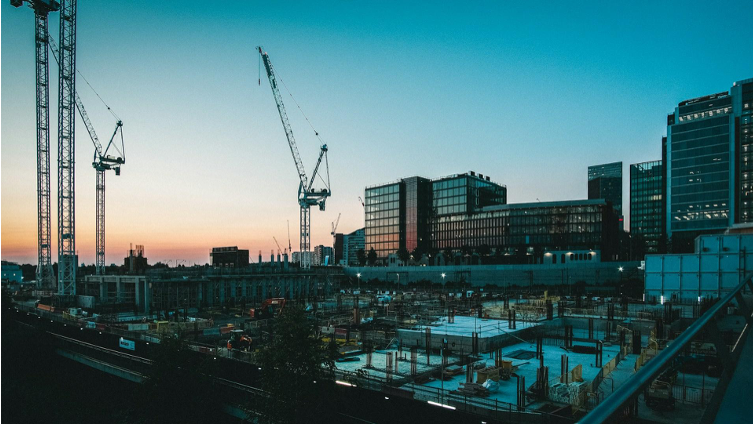
Image: Unsplash
The transition to a zero-carbon world requires continuous effort. While every country is responsible for establishing its own green regulations, the European Union (EU) has become a leader in decarbonisation. Recent policies have set a high standard for other countries, but the EU’s construction carbon footprint can still improve. People should understand existing policy gaps to anticipate future improvements.
How Europe’s Decarbonisation Standards Are Working
All EU countries ranked among the top 10 evaluated for energy efficiency. There are numerous reasons for that result. The European Commission launched the European Green Deal in 2019, which included measures to invest in eco-friendly technologies, decarbonise the energy sector and make buildings more energy-efficient. Each improvement made the organisation emit fewer greenhouse gases, but there is still room for industry-specific improvement.
The EU regulates vehicle emissions, but not non-road mobile machinery (NRMM). Industries relying on that equipment, like construction companies, could use more guidance to develop greener operations. Understanding how EU policy could improve within the construction industry will help people learn why buildings are becoming more sustainable, but the practices surrounding them are not where they could be.
Policy Gaps That Need Improvement
Anyone can learn how construction companies can better support the planet by learning what current regulations do not address. The gaps will point the way forward for future regulatory writers.
1. Construction Equipment Does Not Have CO2 Restrictions
When someone drives a vehicle, carbon dioxide (CO2) emissions limits apply to their car’s model. Construction equipment emissions do not have similar restrictions. They count as NRMM, which will need their own legal guidance.
Potential emission restrictions could work in multiple ways. They might outline how much of a company’s carbon reduction percentages must come from internal operations. Machinery that undergoes regular maintenance works better and requires less fuel, shrinking a construction team’s carbon footprint. Similar operations updates could help even the smallest companies support the environment more efficiently.
EU restrictions can also improve how manufacturers make NRMMs. Some teams may use electric excavators, while others will still rely on models powered by fossil fuels. If policies require manufacturers to make only traditional excavators that emit a specific amount of CO2, the entire industry could improve without a total shift to electric fleets.
2. Regulations Do Not Address Electric Availability
Battery-powered construction equipment is accessible. The machinery can also handle everyday construction work, but challenges remain. Smaller companies may not have the funding to invest in widespread fleet upgrades. Europe’s decarbonisation policies also do not require construction companies to have a specific percentage of electric machines, so there is no legal incentive to change a minimal number of pieces of equipment.
People may also hesitate to switch to electric construction equipment because there is no required charging infrastructure. Zero-emission excavators relying on battery power will need places to charge, either at a company’s headquarters or on active build sites. If the EU had legal guidance about how companies or local governments could create a robust infrastructure with compatible chargers, the industry may become greener.
Industry forecasts show that larger electric cranes will be available by 2030. There is a rising demand for battery-powered construction equipment of all sizes, but progress is still slow due to challenges in battery development. Other policy updates could establish goals across the EU to motivate the private companies to develop new battery technologies.
3. AI Remains Out of Reach
Artificial intelligence (AI) is easy for consumers to access, but it is not a standard tool in construction equipment. If regulations began mandating that AI become part of construction machinery for specific uses, like measuring embodied carbon construction rates, industry leaders may feel more inclined to incorporate it into their green business practices.
Training and data security are other concerns. An electric excavator might use AI to complete more accurate digs, but the software also collects employee information for login and location-tracking purposes. Employees need to know how to learn the system, train it for their job purposes and understand how it keeps their information safe. Legal regulations throughout the EU can make that happen more effectively.
As additional construction companies use AI features to perform more accurate work, they will also contribute to the carbon emissions created by AI data centres. Current construction policy does not address the building sector emissions specific to AI tools, which will be a concern if regulatory gaps close.
Solutions People May See Soon
Lawmakers will craft the specific wording within any regulatory solutions to construction decarbonisation. However, people can still expect some general improvements over time.
Equipment-Specific Carbon Limits
Electric construction machinery is becoming more popular, but teams still rely on equipment that needs fossil fuels. Future policy additions can restrict carbon emissions for each machine type. The 2030 deadline for the EU to reduce greenhouse gas emissions by 55% is approaching quickly. While there is little left for policy updates within that time frame, the next 10-year deadline can include equipment carbon limits for construction teams.
Policies About Charging Stations and Fleet Sizes
The industry can shift to electric equipment in multiple ways. Lawmakers may set a minimum electric fleet mandate for larger companies. Corporations that could afford major fleet overhauls would shift into greener practices without requiring the same investment from small companies.
Lawmakers may also create a deadline to establish a charging infrastructure within the industry. If people know exactly how they will charge their electric construction machinery on active sites or within their facilities, they may upgrade sooner.
Charging station policy can also include wording about using specific weather-resistant materials to maximise the lifespan of each installation. Station rooftops could even double as sites for installing solar panels to generate company-specific electricity. Making infrastructure last is the best way to achieve carbon-reduction targets and keep them below those goalposts.
AI Regulations Regarding Training and Data Security
The EU AI Act recently established new frameworks for AI applications, which should make AI platforms safer and more ethical in data usage. Future policies can also address construction industry training regarding AI programmes and platform-specific bot creation. The wording outlining how to prosecute data security issues related to AI construction tools will also be necessary for long-term results.
Some regulations will need to address emissions from AI programmes increasingly used for professional operations. Construction industry decarbonisation should not remain limited to equipment. The resources teams use to make their operations more efficient should also fall within sustainability efforts.
The EU’s Construction Carbon Footprint May Shrink
People working within the EU construction industry can expect policy updates in the coming years. As people gain more access to tools like electric excavators and AI-assisted software, they will need regulatory support. If policies ensure equal access to charging stations, construction professionals will help their industry better align with the EU’s long-term sustainability goals.
About the author: Rose Morrison is the managing editor of Renovated Magazine and an experienced writer specializing in energy demand and sustainability. With eight years of experience in the field, she provides EnergyInDemand readers with expert analysis and practical strategies for achieving energy efficiency and reducing carbon emissions. Connect with Rose on LinkedIn.
 Energy in Demand - Sustainable Energy - Rod Janssen