
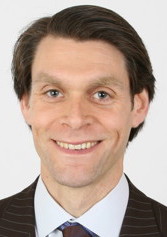
Matthew Ulterino attended the Renewable Energy World/Power-Gen Europe Conference that was held recently. These are his impressions from the plenary session followed by a summary and abstract of the paper he delivered.
Plenary Session – Liberalisation and Decarbonisation: Roadmap or Roadblock?
One of the main conference highlights was a plenary panel that was assembled to take on what has become, to many observers, an incompatibility of European energy policy – on the one hand, pushing forward market mechanisms that seemingly leverage the capital and corporate heft of the large energy companies to compete across borders and deliver energy reliability; and on the other, pushing policy prescriptions for massive energy supply carbon reductions which nearly begs for disruptive technologies and new entrants. Broadly speaking, the panel members were split between policy practitioners and thought leaders animated by the decarbonisation agenda, and executives and consultants from the incumbent energy industry who have been drawn to the promise of liberalised markets. Whether intentional or not, the discussion was dominated by the institutional and financial challenges that the incumbent energy supply companies face in this current landscape. One of the participants from the consultancy IHS CERA made a very compelling statement about the large number of money-losing centralised energy plants across the continent, many which are nowhere near the end of their design life. The suggestion was that if this is what’s in store for capital intensive energy companies, the liberalised market may see more fleeing than entering and failing than flourishing.
While all the participants representative of the large energy incumbents said they supported the decarbonisation agenda and want to be part of the solution, it’s a questionable assertion that they can effectively be. Markets, by their nature, are meant to dispassionately leave behind old assets and systems if they’re no longer fit for purpose, and allow others to take their place. The plenary made obvious that these companies find themselves in an uncomfortable and unenviable place. There’ll be lots of interest in how this dynamic either hinders or facilitates the low-carbon energy transition over the coming years.
A recording of this 90 minute session can be viewed by registering at the following link:
http://video.webcasts.com/events/pmny001/viewer/index.jsp?eventid=46234&adid=em
Conference Paper – Delivering Distributed Renewable Energy within Large-Scale Property Projects: Obstacles and Opportunities
Matthew Ulterino of Rodin Consulting in London co-wrote and presented a paper at the conference that sought to engage renewable energy sector practitioners on possible ways of collaborating with the property industry so that distributed energy generation becomes part and parcel of new development master plans. With co-author Chris Panfil of the urban design practice WATG, the paper describes how so few major property projects currently deliver on their early stage sustainable design promise for renewables, and suggests practical alternatives to how property projects are typically delivered. With EU-wide mandates for zero-energy buildings phasing in by end of decade, this is an issue that needs further attention. The abstract follows below. Matthew can be reached directly via email at matthew.ulterino@rodinconsulting.co.uk for those interested in more detail.
Abstract: In mature and emerging markets worldwide, large-scale property development projects routinely strive for excellence in environmental design. The potential of energy efficiency and on-site renewable / clean energy generation allows for demand reductions to leverage the remarkable performance and cost gains being realised in distributed renewable technologies. These factors – where supported by regulatory and market certainty for decentralised energy production, ownership and distribution – offer great promise to property developers seeking market differentiation and long-term value. Many projects, however, fail in the transition from intent to practice. ‘Green’ and low-carbon solutions which are thoughtfully conceived at concept stage and in early detail design face many obstacles as projects move toward full design, financing, and construction. A possible means to maintain this early-stage intent is to sever the property and energy financing so as to seek separate specialist debt and equity sources to fund the renewable energy assets, alongside innovative lease agreements between the underlying property asset and the overlaying energy source. This paper will explore the opportunities, benefits and risks of co-developing these assets -property and energy – utilising specialist finance and delivery structures.
 Energy in Demand - Sustainable Energy - Rod Janssen